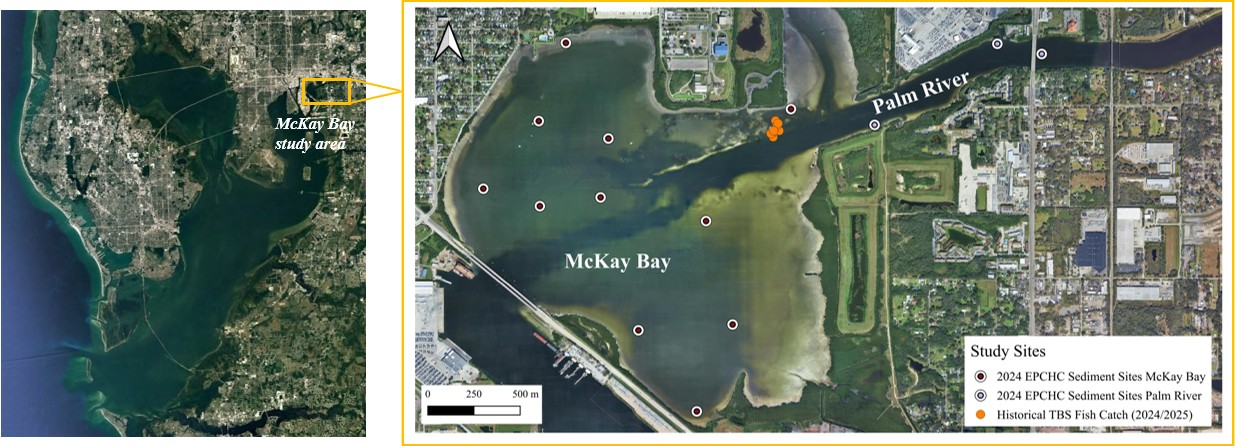
The left map shows the location of the McKay Bay study area within Tampa Bay, while the right map provides a detailed view of sediment sampling sites and historical fish-catch locations within the study area.
A companion study to the Tampa Bay Surveillance project, the College of Marine Science at the University of South Florida was awarded funding from the Environmental Protection Commission of Hillsborough County (EPCHC) for a three-year project (12/3/2025 to 12/2/2028) examining contaminants in sediments, oysters, and recreationally harvested fish in McKay Bay and the lower Palm River.
We call this study McKay Bay TRACE – Targeted Research and Assessment of Contaminants in the Estuary (official name: Impacts of Chemicals of Emerging Concern (CECs) on Fishes and in Sediments of Hillsborough and McKay Bays, Tampa Bay, Florida).
McKay Bay and the Palm River are located in a heavily urbanized and industrialized area at the northeastern end of Hillsborough Bay. Previous studies have identified pollutants in the area’s sediments and fish tissues, including per- and polyfluoroalkyl substances (PFAS), polychlorinated biphenyls (PCBs), organochlorine pesticides, polycyclic aromatic hydrocarbons (PAHs), and metals. Local residents have also raised concerns about the safety of consuming fish and invertebrates caught in these waters. This project builds on earlier research and ongoing Tampa Bay Surveillance sampling to provide an updated, more comprehensive picture of potential chemical threats in the area.
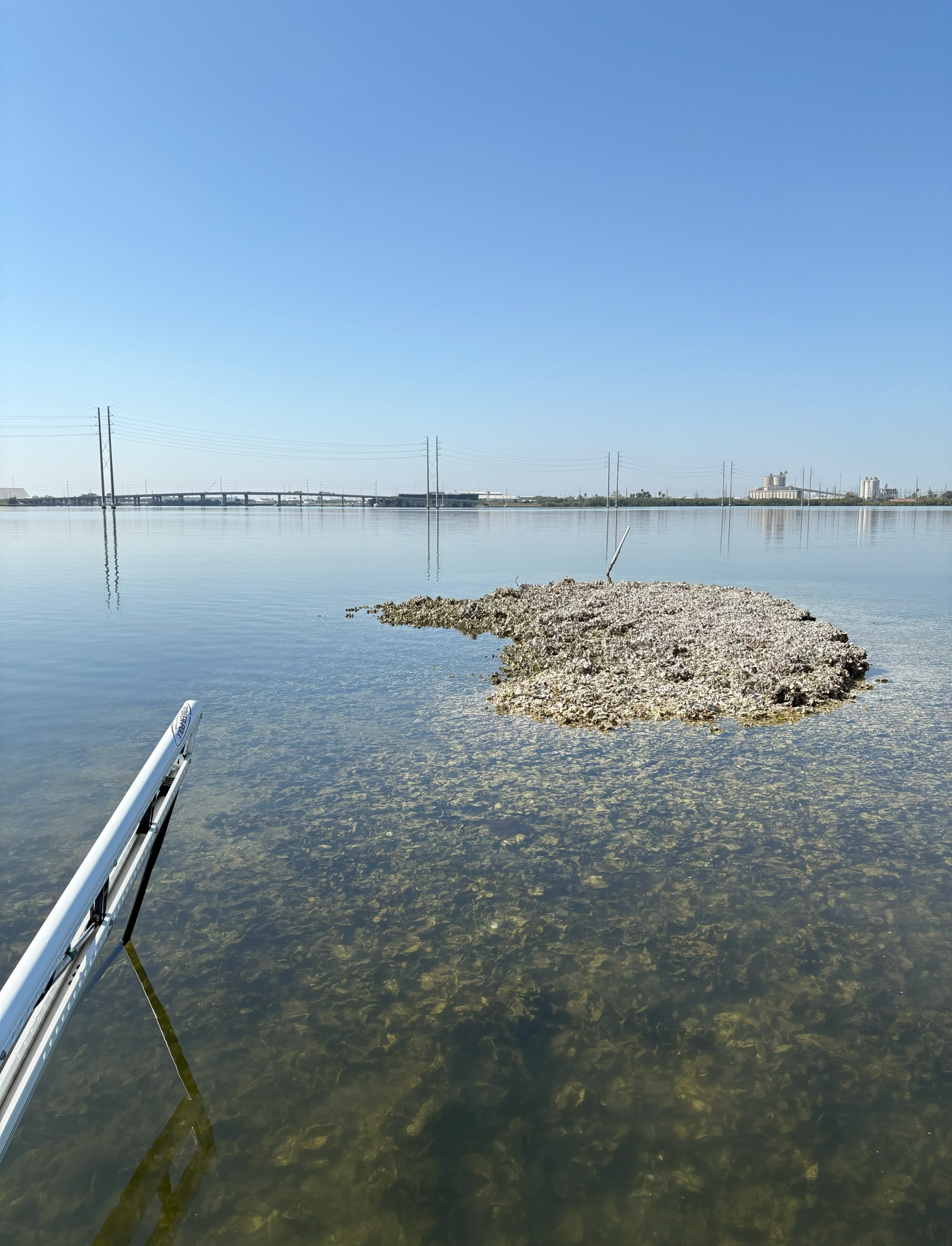
A McKay Bay TRACE study site - displaying the industrial characteristics of the area.
For this study, we will:
- Collect and analyze sediments from McKay Bay and the lower Palm River, including areas where earlier research found elevated contaminant levels.
- Sample oysters and recreationally important fish, including Spotted Seatrout, Red Drum, and Snook, to measure contaminants and evaluate potential risks associated with consuming locally harvested seafood.
- Compare current sediment contaminant levels with findings from a 2014 study to assess progress in pollution remediation and identify areas where contamination may persist.
- Interview recreational and subsistence fishers to better understand fishing activity, commonly harvested species, seafood consumption patterns, and community concerns.
- Combine environmental and social science findings to support seafood risk assessments, future pollution-reduction efforts, and longer-term monitoring.
By examining contaminants in the environment, in species people catch and eat, and alongside information shared by local fishers, the project connects ecosystem health with human health. The findings will help EPCHC, regional partners, and the Tampa Bay community evaluate the effectiveness of past restoration and remediation efforts, identify remaining areas of concern, and make more informed decisions about pollution management and locally harvested seafood. Community engagement is an important part of the work, helping ensure that future monitoring and risk-management strategies reflect how people use and value McKay Bay and the Palm River.


