
A companion study to the Tampa Bay Surveillance project, the College of Marine Science at the University of South Florida and Eckerd College were awarded a project entitled ‘Spatial Dynamics of Emerging Chemical Threats Along Social and Ecological Gradients in a Large Urban-to-Rural Estuarine System‘ which we re-named: Tampa Bay REACH (Regional Estuary Assessment of Community Health).
Originally planned as a three-year study (1/1/2025–8/31/2028), Tampa Bay REACH was significantly shortened following unexpected changes in project funding. Researchers adapted the project’s scope and with supplemental support from Eckerd College and the Florida High Tech Corridor, completed one year of survey data collection to provide a snapshot of community health and exposure concerns. The resulting work addresses a critical gap in our understanding of the combined effects of emerging (e.g., PFAS, pharmaceuticals, radiation) and legacy (e.g., PCBs, PAHs, pesticides) chemical pollutants on coastal communities. By integrating social and environmental science approaches, the project provides a more comprehensive assessment of human health risks in Tampa Bay, Florida.
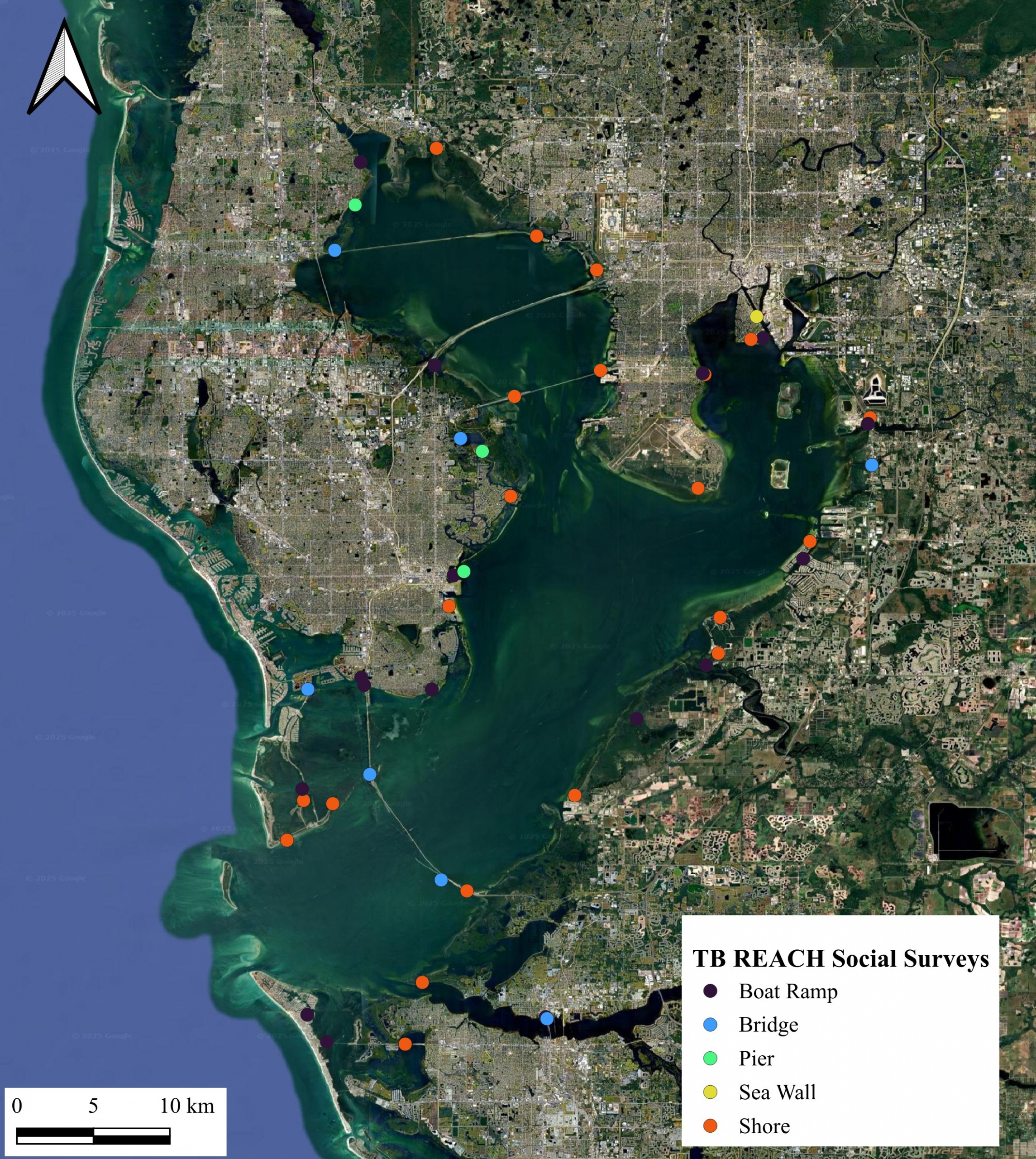
Survey sites for the Tampa Bay REACH project
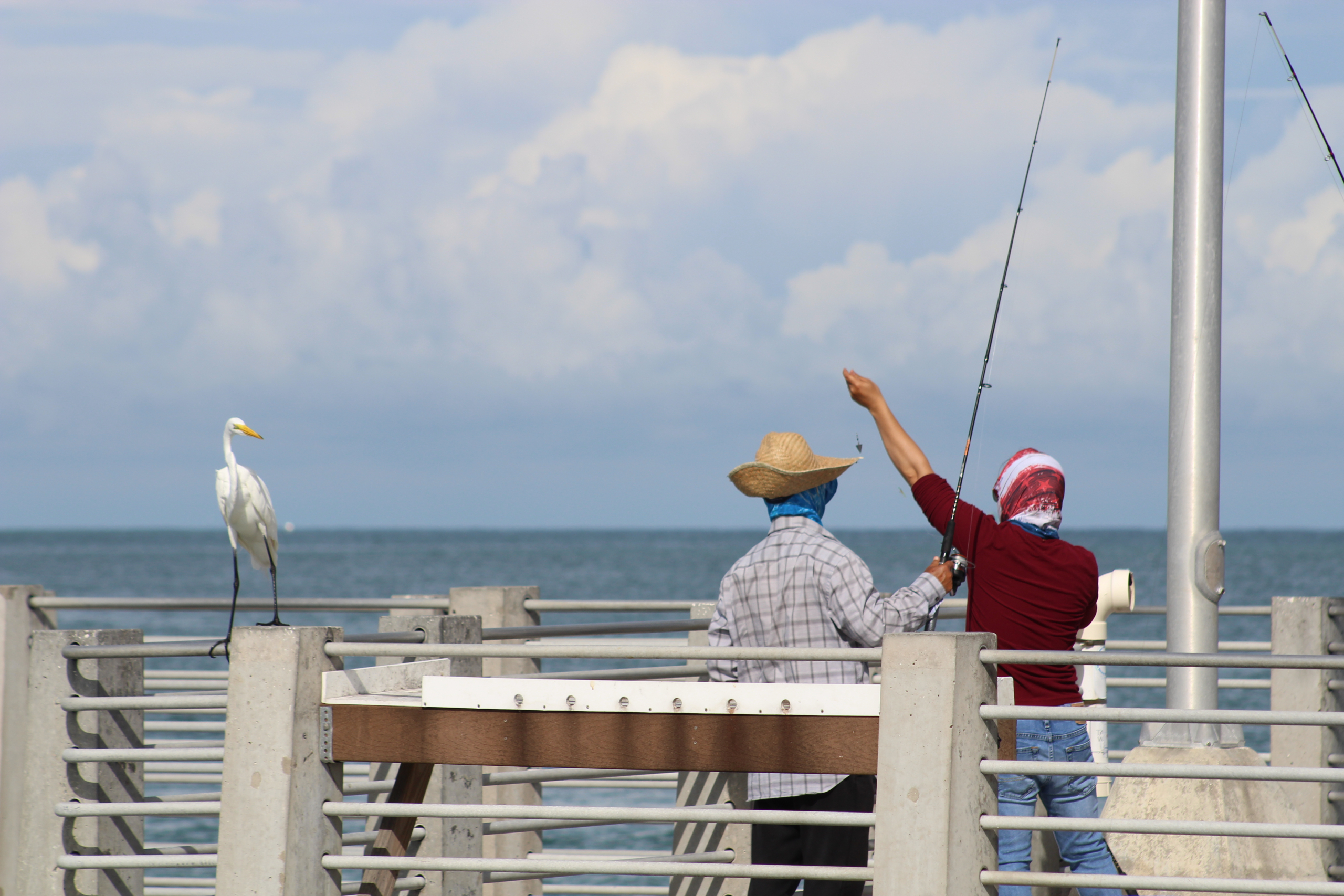
Fishing at the Gulf Pier in Fort DeSoto Park, Tierra Verde, Florida
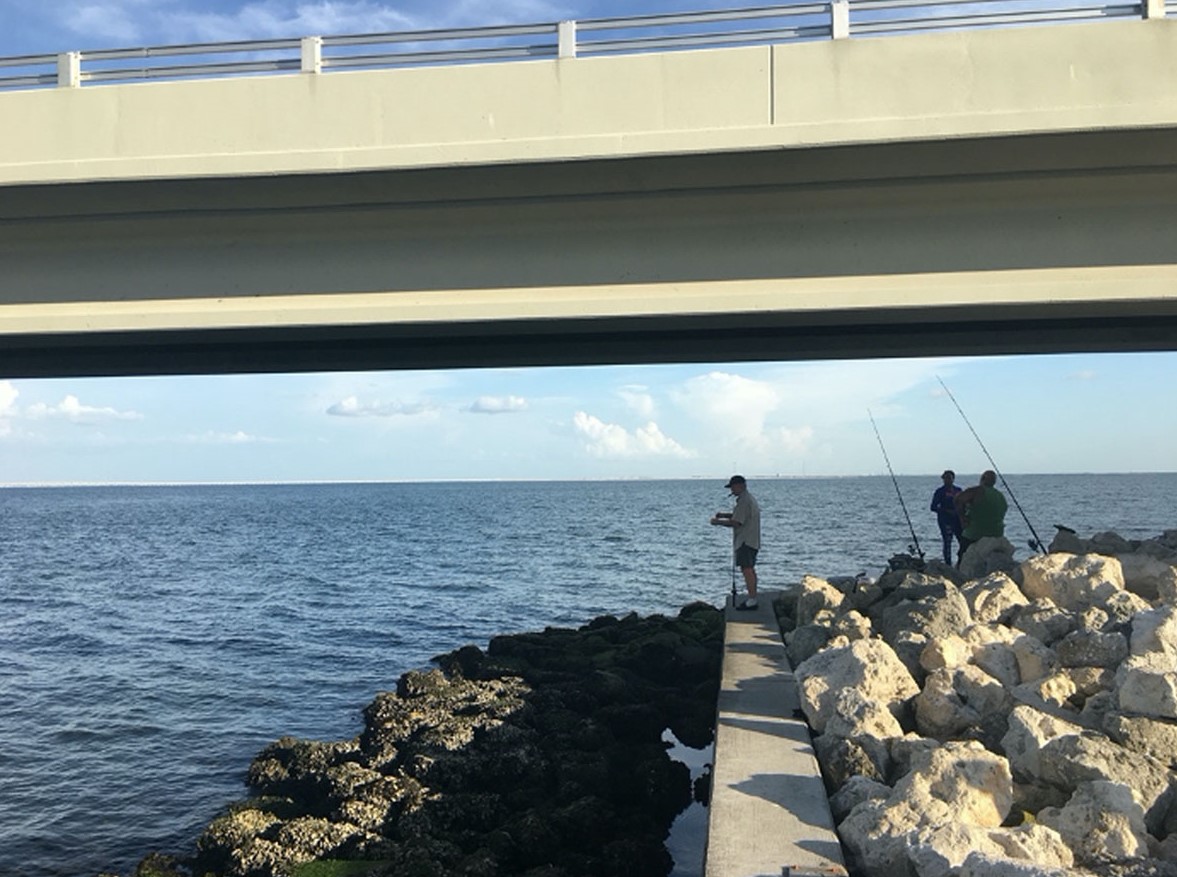
Fishing under the Courtney Campbell Bridge, Tampa, Florida
Unlike traditional studies that focus on a single pollutant class or generalized fishing populations, this research targets a broad spectrum of chemicals and prioritizes the needs of subsistence fishers – types of fishers whose primary fishing purpose is not sport, but feeding themselves and their families. Subsistence fishers face potentially higher exposure due to their consumption patterns. The project’s findings, combined with toxicology and contaminant data from our companion NOAA-funded study of emerging chemical threats, will inform the development of data-driven risk assessments and pollution mitigation strategies, while also ensuring that vulnerable populations are not disproportionately harmed by pollution and that their health is protected.


