TBS Home2026-01-28T15:11:29+00:00

Tampa Bay Surveillance Project

Investigating contaminants for human and environmental health.

TBS Objectives

  • 1 – Sample sediments, oysters, barnacles, fish, and fishers of Tampa Bay to assess concentrations and seasonal patterns of contaminants of emerging concern (CECs) and legacy pollutants.

  • 2 – Determine relationships between contaminant body burdens and a range of health-related effects.

  • 3 – Characterize associations between chemical contaminants.

  • 4 – Survey human consumption patterns focusing on subsistence-level fishers.

  • 5 – Develop quantitative risk assessments for seafood consumption.

  • 6 – Test prototype remediation methodologies.

  • 7 – Inform various City, County, State and Federal agencies.
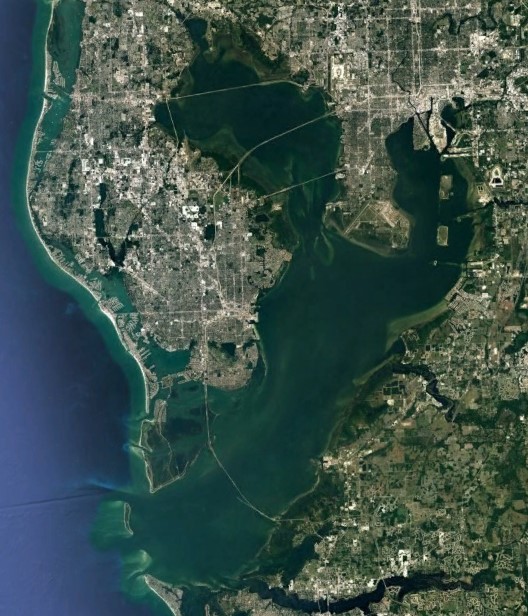
Satellite map of Tampa Bay

Satellite Image of Tampa Bay, Florida

“The Tampa Bay Surveillance Project combines the skills and knowledge of the region’s foremost recreational fishing captains and world class scientists from USF’s College of Marine Science and Eckerd College to evaluate pollution from a wide range of industrial, agricultural and personal care products.”

Steven Murawski, Principal Investigator

Trusted Collaborators

Our Management Technical Advisory Group (MTAG) is comprised of experts in water, environmental, wildlife and human health. The knowledge and perspectives from their respective disciplines and organizations will help guide our research to have the biggest impact on our local communities.

TBS News

Stay current with our latest updates and announcements.
🎣 CAPTAIN FEATURE: MATT SANTIAGO

Captain Matt is one of the local charter captains that helps make the work of the Tampa Bay Surveillance Project, Barnacle Baseline, and the McKay Bay project research efforts possible.

Our partnerships with local captains are incredibly valuable. These are the people who know Tampa Bay — its waters, fish, tides, seasons, and changing conditions — from years spent on the water. Their knowledge helps scientists better understand the Bay and allows us to get where we need to go to do the work.

We’re grateful for everything Captain Matt brings to our projects, from his expertise on the water to his willingness to work alongside scientists to the tunes he plays for us on his boat! We truly could not do what we do without him!

We asked Captain Matt a few questions about his career, his favorite memory working with the TBS crew, and what he does when not working with us. Swipe to see the sweet tarpon caught by his wife! 🎣

Thank you, Captain Matt, for being such an important part of our Tampa Bay science community! 💙
The Tampa Bay Surveillance team has been out sharing research and connecting with colleagues at two recent conferences!

Last week, Sherryl Gilbert, Assistant Director of Marine Research and Development, and graduate researcher AJ Gross attended the FLERA Conference in Jacksonville, where they presented on Wastewater and Stormwater Impacts in Florida’s Estuaries.

This week, anthropologist Dr. Heather O’Leary is attending the Science of PFAS Conference, learning about the latest PFAS research while surveying conference attendees about fish consumption as part of TBS’s social science research.

These opportunities to share research and learn from others help inform our ongoing work to understand contaminants and their impacts in Tampa Bay.

#tampabaysurveillance #pfas #wastewater #socialscience #marineresearch
TBS doctoral student researcher Kylee Rullo-Soletti has a new publication in Fisheries Oceanography! Drawing from Kylee’s master’s research, this study uses stable isotopes in tuna eye lenses to explore how yellowfin and blackfin tuna change their diets and move through the Gulf over their lifetimes, offering new insight into their movement patterns and residency.

Congrats, Kylee et al.! 🎉🐟

Link to full publication in our stories 🔗
Cheers to ONE year of TBS on social media! 🥳 WOW. We’ve come a long way and we’ve loved bringing you on the journey. 🐟🦪

Outreach is a huge part of what we do, because science shouldn’t stop in the lab… it’s meant to be shared, understood, celebrated, and put into action! 🌎✨

#tbsproject #outreach #tampabay #environmentalhealth
The Tampa Bay Surveillance Project launched in late 2023, and since then, three companion studies have expanded our work across Tampa Bay.

🎣 Tampa Bay REACH expands our investigation of fishing habits and community knowledge of contamination. 🦪 The Barnacle Baseline Project is helping us better understand contaminant sources and concentrations using barnacles as sentinel species. And through 🔬 McKay Bay TRACE, we’re examining contaminants in fish and people in one of Tampa Bay’s most heavily urbanized and industrialized areas.

Together, these projects are building a more comprehensive picture of contamination in Tampa Bay—from contaminant sources and environmental pathways to wildlife and human exposure, and what that means for communities connected to the bay.

🎞️ Take a look at the video for a brief snapshot of each project, including its timeline, current status, and some highlights from the work to date.

#TampaBay #TampaBayResearch #EnvironmentalResearch #MarineScience #Contaminants
Introducing McKay Bay TRACE (Targeted Research and Assessment of Contaminants in the Estuary) … and two different types of field days with the same week! 🐟🧪

McKay Bay TRACE is a new companion project to our Tampa Bay Surveillance (TBS) study. Similarly to our TBS study, McKay Bay TRACE will investigate contaminants in sediment, oysters, and recreationally harvested fish, but with a targeted focus on McKay Bay and the lower Palm River.

🎣 Field sampling is officially underway! Throughout the duration of the project, our team will take a closer look at what’s in these waters, what’s making its way into the species people catch and eat, and what it means for the health of this unique urban estuary.

Learn more about the project by clicking the link in our story and follow along as we TRACE McKay Bay! 🌊🔬

#contaminants #TampaBay #McKayBay #marineresearch #PalmRiver waterquality
Join us Thursday, August 6, from 10:00 to 11:30 a.m. EDT for @noaa Student Experiences 3-Minute Lightning Talks: Gulf of America Forum Webinar. 

Tampa Bay Surveillance Project graduate students Kylee Rullo-Soletti and Alexandra Lee will share their research in fast-paced, three-minute presentations: 

📍 Kylee Rullo-Soletti: “Location, Location, Contamination: Spatial Patterns of PFAS in Tampa Bay Red Drum” 

🐟 Alexandra Lee: “Investigating Parental Offloading of Chemical Pollutants in Spotted Seatrout”

Fellow @usfmarinescience graduate student Hallie Repeta will also present “Evaluating Climate-Responsive Management Strategies for Gulf Menhaden Using an End-to-End Ecosystem Framework.” 

Tune in for a quick and engaging look at the impressive research being conducted by students throughout the Gulf region! 

Register here ➡️ https://register.gotowebinar.com/register/4196055686550101592 (find the live link in our stories)
Meet Alexis Mitchem, a PhD candidate in Dr. Mya Breitbart's lab and our resident DNA Diva! 🧬🐟

For the Tampa Bay Surveillance Project, Alexis is uncovering what common snook are really eating using DNA metabarcoding and stable isotope analysis. By piecing together these underwater food webs, she's exploring predator-prey relationships, trophic positions, and how snook diets change as they grow.

Her research helps us better understand Tampa Bay's ecosystem and provides valuable information to support fisheries management and conservation. 

Every DNA sequence tells a story—and Alexis is helping us read the menu! 💙🌊

Check out where she hopes to go next in her career path, what her favorite field snack is, and advice to her younger self in this staff feature! 

#StaffFeatureFriday #TampaBaySurveillance #Snook
What’s in the freezer? A whole lot of fish stomachs...and food-web clues. 🐟🔍

Before stomach dissections begin, Dr. Steve Murawski and members of the Tampa Bay Surveillance team gathered to take stock of the samples and discuss methods for the work ahead. 

Next came a visit to the Florida Fish and Wildlife Research Institute (FWRI) for hands-on training with Julianne Knight, a veteran of the Fish Feeding Ecology Lab, affectionately known as the “Guts Lab.”

Julianne shared her expertise and plenty of tips for dissecting fish stomachs and identifying their contents, including fish, crabs, mollusks, parasites and even bait. It’s as gross as it sounds, and every bit as fascinating. Identifiable features such as shells, bones and other hard structures can reveal important clues about what these fish are eating. (Thank you, Julianne and FWRI!)

Graduate researchers Lauren Bulik and Alexis Mitchem recently joined the TBS team to help take this work further. By combining diet analysis with research on contaminants across trophic levels, they will help us better understand predator-prey relationships and how contaminants move through Tampa Bay’s food webs.

We’ll be introducing Alexis, the DNA Diva, this Friday. Stay tuned! 📻 🧬 🔍
✨ Staff Feature Friday is back! Meet Lauren Bulik, a Ph.D. student in Dr. Steve Murawski's Lab… and new appointed Marine Science Advisory Committee Secretary (Congratulations!🎉)

For the Tampa Bay Surveillance Project, Lauren is investigating contaminants in the prey found inside the stomachs of our study fish. That's right, she gets to uncover what predators like red drum are eating! 🐟

By identifying their prey and analyzing contaminants, Lauren's research will help us better understand how contaminants move through Tampa Bay's marine food webs and ultimately reach larger predators.

Get to know Lauren by learning her favorite spot around Tampa Bay, the one animal she'll eat despite being a vegetarian, and the advice she'd give her younger self. We can't wait to see what our fish have been ingesting! 

#TBSProject #FoodWebs #biomagnification
Lights, camera, DISSECTION!🎬🦪

Layne Leggett (TBS/Barnacle Baseline Graduate Student Researcher) photographs barnacle tiles pulled from Bayboro Harbor. Remarkably, these were removed from the dock behind the Marine Science Lab just one day before the fire.

Before any dissecting happens, Layne sets the mood (shutting the blinds and turning off the lights…) to get glare-free, consistent shots of each tile. Those images feed into ImageJ, software that measures barnacle growth, size, and percent coverage — key data for the Barnacle Baseline project.

Swipe to see the largest barnacle Layne has laid forceps on!

#BarnacleBaseline #MarineScience #Love4Inverts
As we restock our changing lab and office spaces and keep our field and analytical operations moving, each new delivery feels a little like Christmas morning. We felt compelled to capture the immense JOY of receiving and opening all these very special presents. 📦🎄

From making lists (and checking them twice) to receiving ongoing guidance, assistance, and generosity from our partners, colleagues, and extended CMS and TBS family, we have so many people to thank for helping us barely miss a beat.

A very special shoutout to the USF mailroom team, the true MVPs of this operation! 🏆

Please enjoy this utterly fabulous, highly sophisticated, and extremely festive production of TBS’s Christmas in July. (Should the marine science thing not work out, Hollywood clearly awaits…)🎬✨
Loading the next set of instagram posts...
Go to Top