Coming up…. February 27, 2016
GLOBE Basic Training – Environmental Monitoring of Hydrology and Atmosphere Saturday, February 27, 2016 8am-4pm Clam Bayou Marine Education Center 4240 35th Avenue South St. Petersburg FL 33711 Phone: (727) 552-2281

GLOBE Basic Training – Environmental Monitoring of Hydrology and Atmosphere Saturday, February 27, 2016 8am-4pm Clam Bayou Marine Education Center 4240 35th Avenue South St. Petersburg FL 33711 Phone: (727) 552-2281

Greetings All, We will hold our C-IMAGE All Hands Meeting in Tampa on Friday February 5th, 2016 at the Marriot Tampa Waterside (the same place as the Gulf of Mexico Oil Spill and Ecosystem Science Conference). Specifics will be posted…
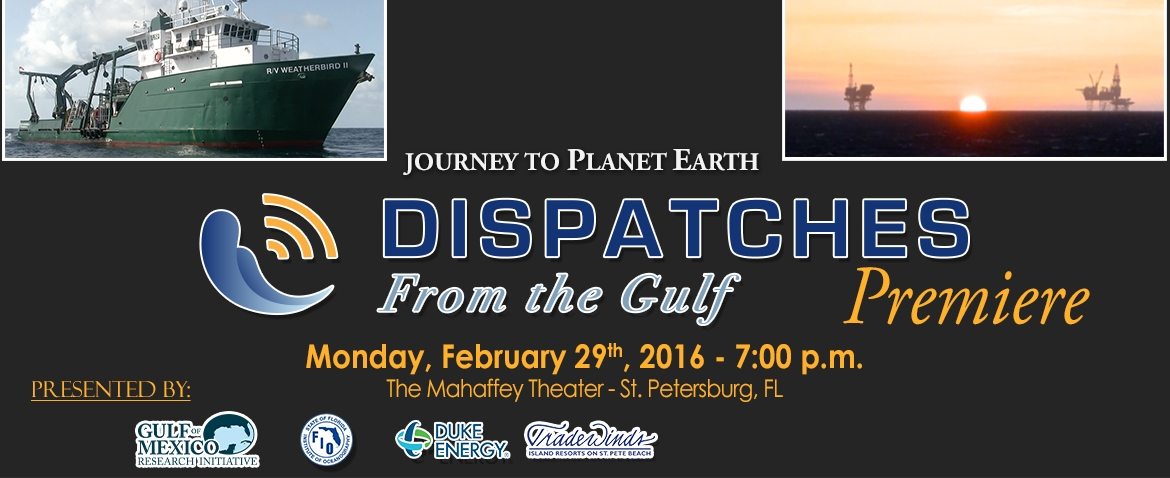
‘Dispatches from the Gulf’ documentary chronicles oil research long after BP spill. Film about the 2010 Deepwater Horizon oil well disaster, produced by Screenscope and narrated by Matt Damon, explains USF’s and FIO’s critical role in documenting disaster’s impact on…
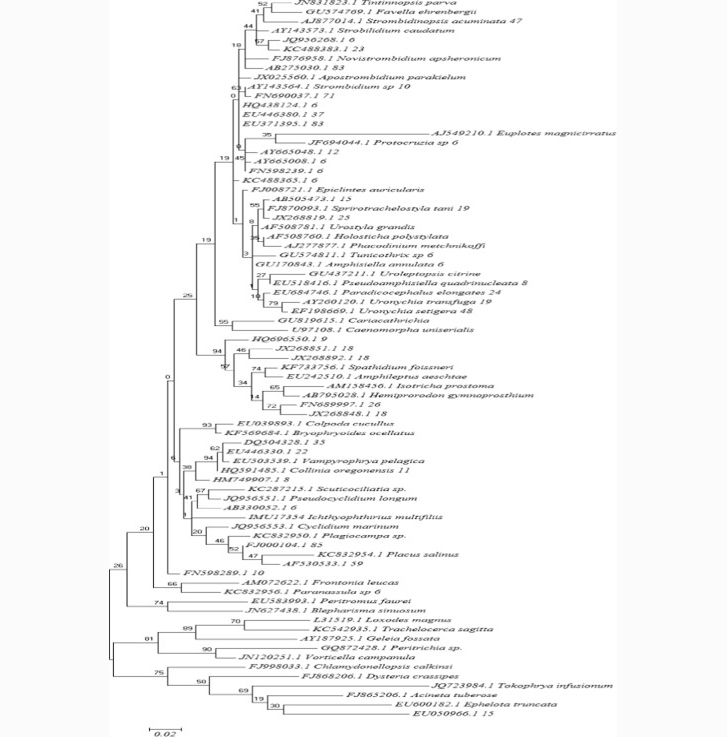
Benthic marine protists have been well documented from shallow marine benthic habitats but remain understudied in deeper habitats on continental shelves and slopes, particularly in the Northeastern Gulf of Mexico (NEGOM). This region was affected by a deep water oil…
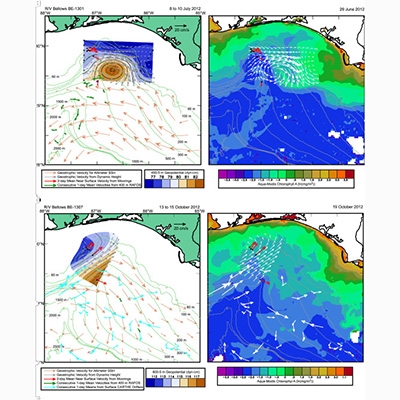
Observations of currents, temperature, sea-surface height, sea-surface temperature and ocean color, derived from moorings, surface and deep drifters, hydrographic surveys, and satellites, are used to characterize shelf-slope exchange events near the apex of the De Soto Canyon in the northeast…
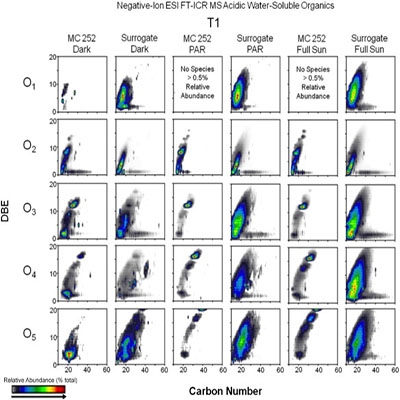
To determine effects of photochemical weathering of petroleum, surrogate and Macondo (MC252) crude oils were exposed to solar radiation during the formation of Water Accommodated Fractions (WAFs) in sterile seawater. Samples were incubated in either unfiltered sunlight, with ultraviolet radiation…
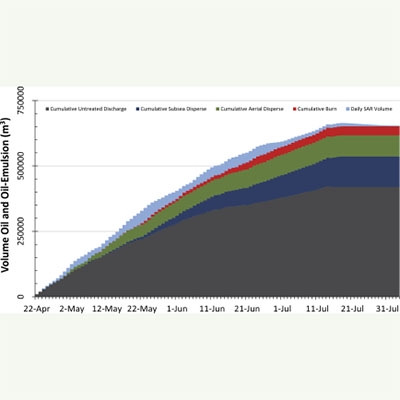
When wind speeds are 2–10 m s−1, reflective contrasts in the ocean surface make oil slicks visible to synthetic aperture radar (SAR) under all sky conditions. Neural network analysis of satellite SAR images quantified the magnitude and distribution of surface…
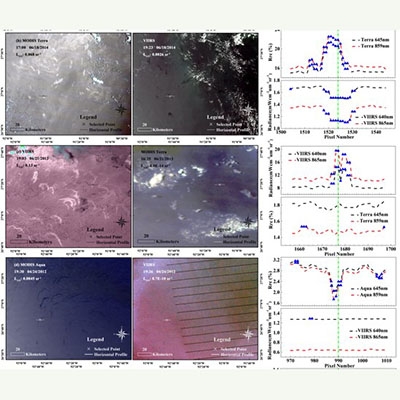
Natural oil slicks in the western Gulf of Mexico are used to determine the sun glint threshold required for optical remote sensing of oil films. The threshold is determined using the same-day image pairs collected by Moderate Resolution Imaging Spectroradiometer…
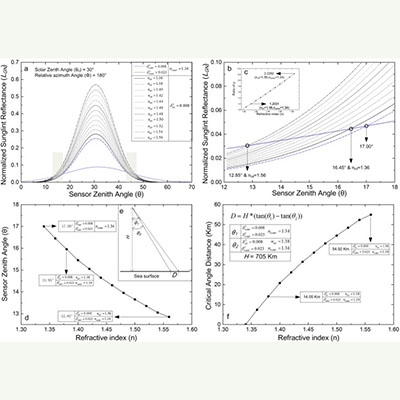
It has long been observed that oil slicks under sunglint can reverse their optical contrast against nearby oil-free seawater. Such a phenomenon has been described through both empirical statistical analysis of the sunglint strength and modeled theoretically using a critical…
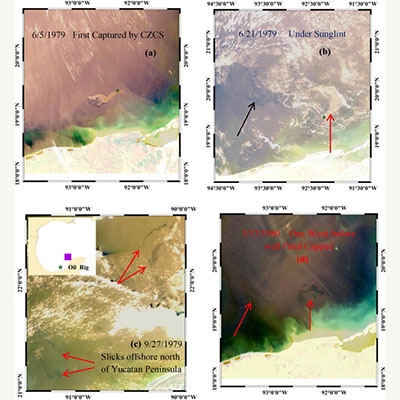
Surface oil footprint and trajectory of the Ixtoc-I oil spill determined from Landsat/MSS and CZCS observations. Shaojie Sun, Chuanmin Hu, John W. Tunnell Jr., Marine Pollution Bulletin. December 2015. doi:10.1016/j.marpolbul.2015.10.036 Abstract: The Ixtoc-I oil spill occurred in 1979 in shallow waters (50 m)…